
The Body as an Elder
(A Reflection on Listening, Longevity, and the Lessons Carried Within)
Every body carries an archive. Beneath skin and breath and heartbeat, we have stories: the ones we’ve lived, and the ones we’ve inherited. The curve of your spine might echo your mother’s. The way your jaw tightens under stress could trace back to a grandfather who had to keep quiet to survive. Your gait, your gestures, your laughter, they all hold memory.
The body is not just a vessel that ages; it is an elder in its own right. Each cell has witnessed seasons of growth and shedding. Each muscle has learned endurance. Each bone, like a tree ring, records both the storms and the stillness.
In many Indigenous and Asian traditions, wisdom is always embodied. In Japanese philosophy, karada (体) means body, but it also means the whole person: spirit, history, presence, and relation. In Traditional Chinese Medicine, the body is a landscape of meridians through which qi (氣), or life energy, flows like rivers. If the current is blocked, imbalance arises. Healing, then, is not the eradication of pain but the restoration of flow.
Our modern world often forgets this. It teaches us to fight the body, to push through fatigue, to override signals of rest, to see aging as something to resist. But what if we began to treat our bodies like we treat our elders with patience, curiosity, and reverence?
Make it stand out
Dr. Cassie shares:
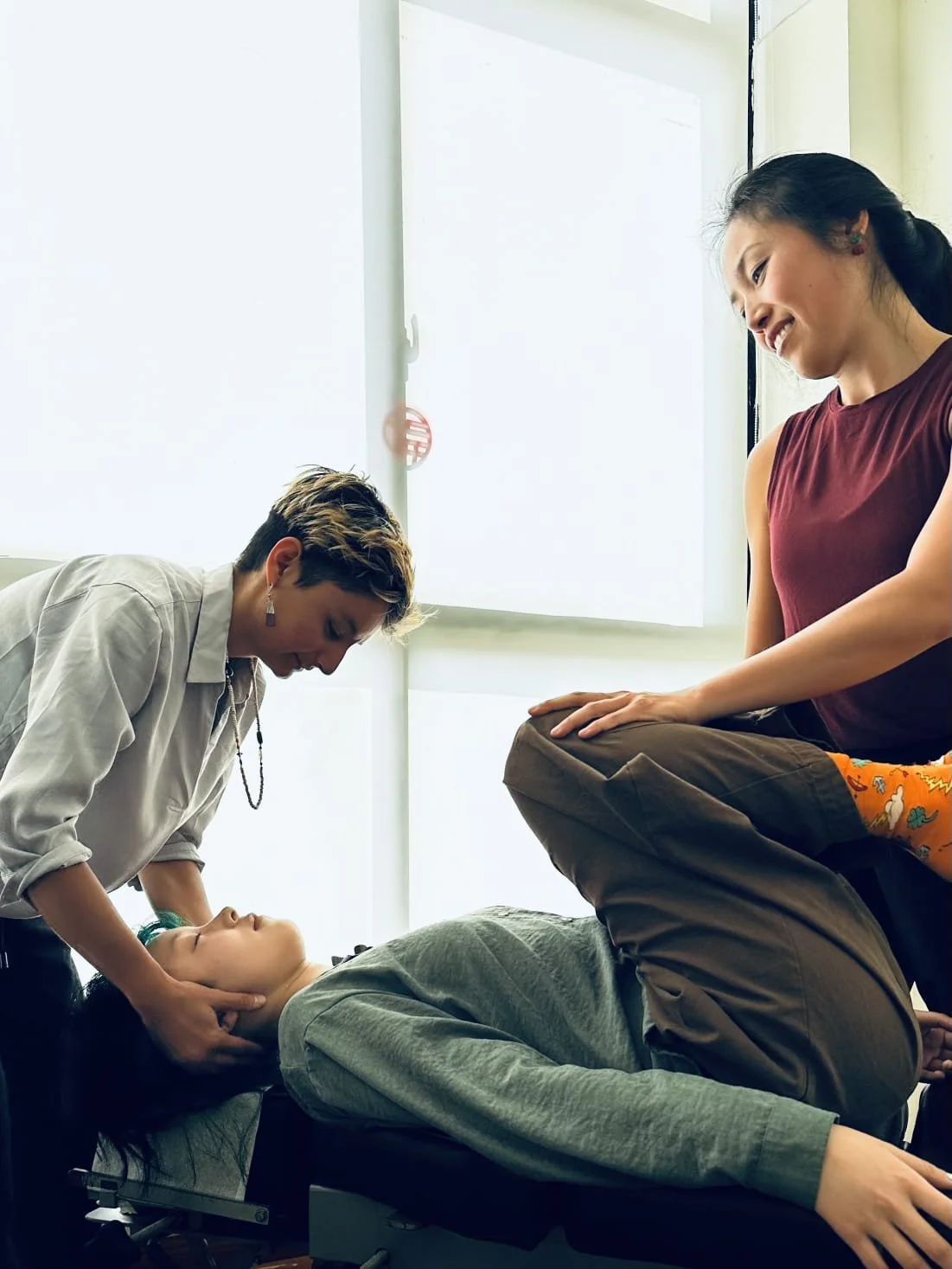
“I often remind patients: your body isn’t against you. It’s communicating. Pain, tension, fatigue are not enemies, they’re messages. When you slow down and listen, the body tells you exactly what it needs.”
Listening is a radical act of care. It’s sitting with yourself the way you would sit with an elder—without agenda, without rushing, simply being present to what surfaces.
Kaname Practice: Listening to the Elder Within
Before your next adjustment, or even at home tonight, try this short grounding ritual:
Find stillness. Sit or lie down comfortably. Let your body settle into gravity.
Place your hands. One hand on your heart, one on your lower abdomen, at the meeting of breath and core.
Breathe slowly. Inhale through your nose, exhale softly through your mouth. Feel your spine lengthen and release with each breath.
Ask your body: What do you need me to know today?
Maybe it answers with warmth in the chest, tightness in the shoulders, or silence. All of these are responses.
End with gratitude. Whisper, thank you for carrying me, and let the breath carry that thank-you down to your bones.
This practice is simple, but powerful. It trains the nervous system to associate stillness with safety, awareness with healing, and care with movement. Over time, it deepens your capacity to feel the subtle flow of your own kaname, the vital point that connects you to balance.
The body remembers and when you honor those memories, you honor the lineage that made you. The tenderness you offer yourself ripples backward and forward in time.
Just as elders hold families together through wisdom and warmth, your body holds you together through constant, unseen work. It adjusts, compensates, heals, forgives, even when you don’t notice. It carries you not just through the day, but through generations.
Reflection:
Treat your body as you would an elder you love. Speak gently to it. Move with respect. Feed it with gratitude. When you listen deeply, you’ll find that it’s been whispering the same truth all along: you are still becoming, and becoming is sacred.